Best Packaging for Home-Based Food Businesses in Pakistan
Starting a food business from home sounds simple.
You cook something people love, post it on Instagram or WhatsApp, take orders, pack the food and send it to the customer.
But once your first few orders start coming in, you quickly discover something:
Good food is only half of the customer experience.
Your food also needs to arrive in the condition you intended it to leave your kitchen.
The biryani shouldn’t spill into the delivery bag.
The curry shouldn’t leak around the lid.
The dessert shouldn’t arrive crushed.
The coffee shouldn’t be impossible to carry.
And your packaging shouldn’t make a growing food brand look like it is still operating from a kitchen at home.
For home-based food businesses in Pakistan, the best packaging isn’t necessarily the most expensive packaging. It’s packaging that matches your food, portion size, delivery method and budget.
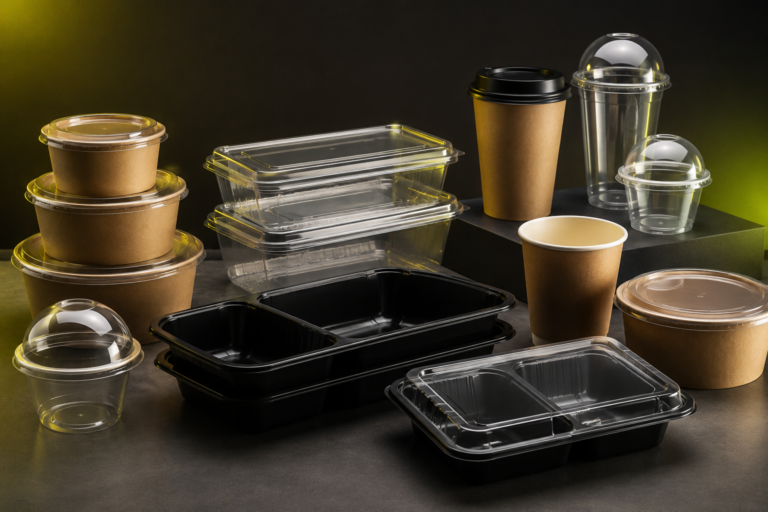
This guide explains exactly what to look for: from food containers and portion trays to dessert cups, dip containers, beverage cups and eco-friendly options.
Quick Answer: What Is the Best Packaging for a Home-Based Food Business?
The best packaging depends on what you sell.
If you sell
Packaging to consider
Biryani, pulao & rice dishes
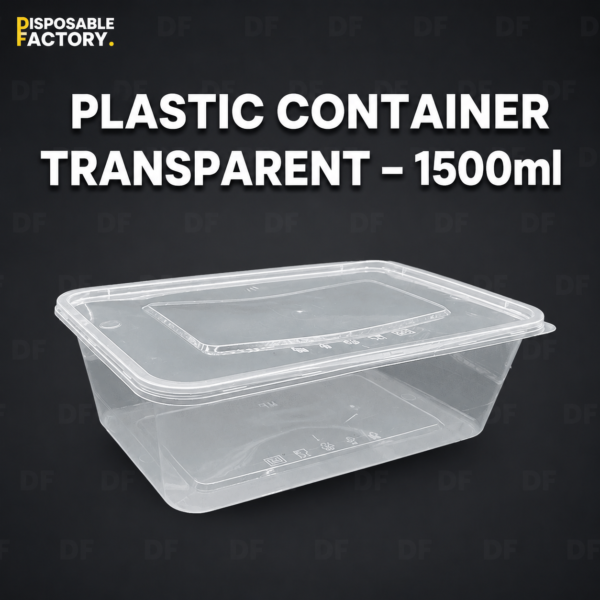
1000ml-2000ml food containers
Curries & gravies
Round containers with secure lids
Meal deals
3-, 4- or 5-portion trays
Desserts
150ml dessert cups
Salads
Kraft salad bowls
Soups
Kraft soup buckets
Sauces & chutneys
Small dip containers
Juices & shakes
12oz-16oz beverage cups
Coffee & hot drinks
8oz coffee cups with caps
Eco-conscious food brands
Kraft or bagasse containers
The key is not to buy one container and use it for everything. Different foods have different packaging requirements.
1. Start With Your Menu, Not the Packaging
One of the biggest mistakes new home chefs make is buying packaging first and figuring out where to use it later.
Do the opposite.
Start with your menu.
Ask:
What food am I selling?
What is the average portion size?
Is it dry, oily, saucy or liquid?
Is it hot or cold?
Does it need separate compartments?
Will customers eat it immediately?
How long will it be in delivery?
Does presentation matter for the product?
For example, a container that works beautifully for dry biryani may not be the best choice for soup.
A dessert cup isn’t going to replace a meal container.
And a large container isn’t automatically better just because it holds more food.
The right packaging is the one that fits the food and the portion.
Choose container capacity using your actual serving, not the label alone.
2. Best Food Containers for Biryani, Rice, Pasta & Main Meals
For many Pakistani home food businesses, the main container will be the most frequently purchased packaging item.
Think:
Biryani
Pulao
Fried rice
Pasta
Noodles
Karahi
Daal
Meal portions
Family portions
For larger meals, Disposable Factory’s range includes options such as:
These sizes are particularly useful when you offer individual, large or family-sized portions. Disposable Factory’s food-delivery packaging guide also recommends these container sizes for larger portions and rice-based meals.
How do you choose the size?
Don’t choose based only on the name “1000ml” or “1500ml.”
Test your actual portion.
Put the normal serving into the container.
Check:
Does the food fit comfortably?
Is the lid closing properly?
Is there enough space to prevent overfilling?
Does the food still look presentable?
A container that is too small can cause mess and leakage. A container that is unnecessarily large can make a normal portion look small and increase packaging costs.
3. Selling Meal Boxes? Use Portion Trays
If you’re selling complete meals, portion trays can make your packaging much more practical.
Imagine a meal containing:
Rice + chicken + salad + sauce
Putting everything into one container can make the food mix together during delivery.
A compartment tray gives each part of the meal its own space.
A cleaner, more compact option for desserts where you don’t need extra headroom.
150ml Dessert Cup Without Lid
Useful when you’re purchasing lids separately or have a specific serving setup.
The current Disposable Factory catalogue lists all three 150ml dessert cup options.
Tip for home bakers: Before ordering hundreds of cups, test your actual dessert in the container. A beautiful dessert can lose its appeal if the portion looks too small inside oversized packaging.
5. Don’t Forget the Smallest Part of the Order: Dips & Sauces
This is one of those things customers notice when it’s missing.
Imagine ordering:
Biryani + raita + chutney
and receiving the main food perfectly packed but the sauce leaking inside the bag.
Small packaging can create a surprisingly big customer-experience problem.
For sauces, chutneys, mayo, raita and other small portions, consider:
2oz Dip Box with Lid
and other small dip/cup options from Disposable Factory’s dips category.
The goal is simple:
Keep small portions separate, secure and easy for the customer to use.
6. Best Packaging for Soups, Curries & Liquid Foods
Liquid foods need more attention than dry foods.
If you’re selling:
Soup
Curry
Nihari
Haleem
Daal
Sauces
Gravies
Stews
your packaging needs to handle movement during delivery.
The current catalogue describes the kraft soup buckets for soups, curries and takeaway foods, while the Disposable Factory leakage guide specifically recommends the round RFC containers for liquid-heavy foods.
One important rule: don’t overfill.
This sounds obvious, but it’s one of the easiest ways to create a leaking order.
Leave appropriate space below the lid rather than forcing the maximum possible amount of food into the container.
And before committing to a packaging type, test it with your actual food and delivery conditions.
7. Selling Salads or Cold Meals? Consider Kraft Bowls
Not every home food business sells curry and biryani.
You may be selling:
Salads
Fruit bowls
Pasta salads
Rice bowls
Cold desserts
Healthy meal boxes
Snack bowls
For these businesses, kraft packaging can give the brand a completely different appearance.
Disposable Factory currently offers:
500ml Kraft Salad Bowl With Lid
1000ml Kraft Salad Bowl With Lid
360ml Kraft Rectangular Bowl With Lid
650ml Kraft Rectangular Bowl With Lid
1000ml Kraft Rectangular Bowl With Lid
The product catalogue positions these for salads, fruits, desserts, rice dishes, pasta and takeaway meals.
For an Instagram-first food business, this can also work nicely with a minimalist branding style.
8. Selling Juices, Shakes or Cold Drinks?
If your home business sells beverages, your packaging needs to be convenient to carry and appropriate for the drink you’re serving.
Disposable Factory’s current beverage range includes:
Juice Cup With Lid: 12oz
Juice Cup With Lid: 16oz
Juice Glass 210ml
Juice Glass 250ml
The 12oz and 16oz cups are suitable for beverages such as juices, smoothies, milkshakes and iced drinks.
How should you choose between 12oz and 16oz?
Use your actual serving size.
If your standard drink is smaller, don’t automatically choose 16oz simply because it looks bigger.
Your packaging should make the portion look intentional, not undersized.
9. Starting a Home Coffee Brand? Don’t Ignore Your Cups
Home coffee businesses, cafés and small beverage brands need packaging that makes takeaway drinks easy to carry.
Disposable Factory currently offers:
Coffee Cup With Cap: 8oz (Black)
Coffee Cup With Cap: 8oz (White)
Ripple Cup With Cap: 8oz
The black 8oz cup is particularly useful for brands that want a more premium, minimal appearance, while the ripple cup provides a different visual and handling style. The current coffee category lists these options and their current price ranges.
For a small coffee brand, consistent cups can also help create a more recognizable customer experience.
Kraft packaging can support a natural, minimal brand presentation.
10. Want a More Eco-Friendly Packaging Option?
You don’t necessarily have to choose between functional packaging and a better-looking presentation.
Disposable Factory also carries kraft and bagasse options.
One example is:
700ml Bagasse Oval Container
This container is made from sugarcane bagasse and is positioned as an eco-friendly option for hot and cold foods.
Other options include:
500ml Kraft Salad Bowl With Lid
650ml Kraft Rectangular Bowl With Lid
1000ml Kraft Salad Bowl With Lid
1000ml Kraft Rectangular Bowl With Lid
If you’re positioning your business around natural, premium or eco-conscious branding, these types of packaging can fit that identity better than plain plastic.
Important: Don’t make environmental claims such as “100% biodegradable” or “compostable” unless the specific product documentation confirms those claims.
11. How Much Packaging Should a New Home Food Business Buy?
This is where many beginners waste money.
You don’t need 15 different container sizes on day one.
Instead, build your packaging around your best-selling menu items.
If you sell only 3-5 dishes:
Start with:
1-2 main food containers
Choose the sizes that fit your most popular portions.
1 small dip container
For sauces, chutneys or raita.
1 beverage option
Only if drinks are part of your menu.
1 dessert container
Only if you’re selling desserts.
Cutlery
Where necessary.
Then expand your packaging range as your menu and order volume grow.
This approach keeps your inventory simpler and reduces the chance of buying packaging that sits unused.
12. How to Choose the Right Food Container Size
Here’s a simple way to think about it:
Small portion
Use a smaller container when you’re selling:
Side dishes
Small desserts
Snacks
Sauces
Individual meal
Choose a medium-sized container that fits the normal serving without leaving excessive empty space.
Large/family portion
Larger containers such as 1000ml, 1500ml or 2000ml may be more suitable depending on your actual food and serving size.
Multiple food items
Consider a portion tray instead of increasing the size of one large container.
Remember: container capacity isn’t the same thing as the amount of food you should put inside it.
Always test the actual portion.
13. Don’t Choose Packaging Based Only on Price
This is probably the biggest lesson for a new food business.
Let’s say one container costs slightly more than another.
It may seem like the cheaper option is automatically better.
That’s why the cheapest packaging isn’t always the most affordable packaging in the long run.
14. Test Your Packaging Before Sending It to Customers
Before buying packaging in large quantities, run a simple test.
Step 1: Fill it with your actual food
Don’t test with water if you’re selling curry.
Use the actual product.
Step 2: Close it normally
Don’t use special handling that your staff won’t use during regular orders.
Step 3: Place it inside your normal delivery bag
Include other items if they’re normally part of the order.
Step 4: Simulate delivery
Carry it around.
Turn it.
Keep it upright.
Test the conditions your actual delivery orders experience.
Step 5: Check the food
Look for:
Leakage
Lid movement
Condensation
Spillage
Food shifting
Crushed presentation
Your customer should be the last person discovering that your packaging doesn’t work.
15. Make Your Packaging Look Professional Without Spending a Fortune
You don’t need custom-printed boxes on your first day.
For a home-based business, start simple.
Use one consistent brand identity.
Add:
Logo sticker
Instagram handle
WhatsApp/contact information
Thank-you card
Simple branded label
A plain container with consistent branding can look much more professional than expensive packaging with inconsistent stickers and colors.
And because your business is probably being discovered through Instagram, your packaging should also look good when a customer photographs it.
Your packaging can become part of your content.
16. A Simple Packaging Checklist for Home Chefs
Before launching your food business, make sure you’ve thought about:
☐ Main food container
☐ Correct container size
☐ Secure lid
☐ Portion tray if required
☐ Dip/sauce container
☐ Dessert packaging
☐ Beverage cup
☐ Cutlery
☐ Delivery bag
☐ Branding sticker
☐ Food label
☐ Packaging test
You don’t need every item.
You need the right combination for your menu.
Frequently Asked Questions
What is the best packaging for a home-based food business in Pakistan?
The best packaging depends on the food you’re selling. Plastic food containers are practical for many rice dishes and meals, portion trays work well for combination meals, dessert cups are suitable for individual desserts, kraft bowls can work for salads and takeaway meals, and lidded cups are useful for beverages.
What packaging is best for biryani delivery?
For biryani, choose a container that comfortably fits the portion without overfilling. Depending on the serving size, options such as Plastic Container Transparent 1000ml, Plastic Container Transparent 1500ml Rectangle, Plastic Container Black C 1500ml and Plastic Container Black C 2000ml can be considered.
What size container should I use for food delivery?
There isn’t one universal size. Choose based on the actual portion you sell. A 1000ml container may work for one type of meal while a 1500ml or 2000ml container may be better for larger portions or family meals.
What is the best packaging for home chefs selling desserts?
Individual dessert cups are a practical option for products such as mousse, pudding, parfait, trifle and cheesecake. Disposable Factory offers 150ml Dessert Cup With Dome Lid and 150ml Dessert Cup With Flat Lid, among other dessert packaging options.
How can I stop my food packaging from leaking?
Use packaging appropriate for the type of food, avoid overfilling, make sure the lid is properly secured, and test the container under realistic delivery conditions. Liquid-heavy foods require particular attention to container shape, capacity and lid fit. Disposable Factory’s detailed guide on food-delivery packaging leaks covers these issues in more depth.
Is kraft packaging better than plastic packaging?
Neither is automatically better for every food business. The right choice depends on your food, required durability, presentation, budget and brand positioning. Kraft and bagasse options can be attractive for businesses that want a more natural or eco-conscious presentation, while plastic containers can be practical for many food-delivery applications.
What packaging does a new cloud kitchen need?
A new cloud kitchen should usually start with packaging for its core menu rather than buying every available size. This may include main food containers, portion trays, dip containers, beverage cups and suitable delivery bags depending on the menu.
Final Thoughts
Starting a home-based food business in Pakistan is exciting.
But your packaging deserves more thought than simply asking:
“Which container is cheapest?”
Ask instead:
“What will protect my food, fit my portion, survive delivery and represent my brand properly?”
That’s the better question.
Your customer may discover your business through an Instagram Reel.
They may place the order through WhatsApp.
They may discover you through a food delivery platform.
But eventually, your food arrives at their door.
That’s when your packaging becomes part of your brand.
Whether you’re selling biryani from your home kitchen, desserts through Instagram, weekly meal boxes, fresh juices or takeaway coffee, Disposable Factory offers packaging options across different food types, sizes and formats.